Thursday, August 2, 2018

To be or not to be [brilliant]


Judge Kavanaugh is in line to replace Justice Kennedy on the US Supreme Court. The nomination dance is about to begin in full force. Critics will raise questions about past cases, judicial temperament, law and the judicial role; and supporters will point to his past accomplishments and the judge’s professed belief in judicial restraint [and general support of conservative causes and ideas]. There is one fact upon which critics and supporters will agree: he is brilliant. Not smart; not clever; not bright; not astute.
BRILLIANT (and yes, I pulled out a thesaurus for help).
This post is a confession on my part. I don’t know what “brilliance” means. I’ve met a lot of brilliant people in my life, but the reason I know they are brilliant is because they tell me so, or others tell me in their stead. And as soon I think I have a handle on what it means, one of our esteemed justices retires and I am back to square one. Let me explain.
Judge Kavanaugh is brilliant, which we know because we are told incessantly. What exactly qualifies him for the distinction is less clear. Here’s what we know: he is a graduate of Georgetown Prep, Yale College and Yale Law School; clerked for Judge Kozinski and Justice Kennedy; worked for the Justice Department and the White House; was a partner at Kirkland & Ellis; and served as judge on D.C. Circuit since 2006. He clearly checks all the boxes for a seat on the Court. But that’s not the question. The question is, is he brilliant, and what makes him so? I can’t tell.
For another recent example, consider Justice Gorsuch. Same story: Georgetown prep, Columbia University, Harvard law, and a Marshall Scholarship at Oxford, where he earned a degree in legal philosophy; clerkships with Judge Sentelle and Justices White and Kennedy; DOJ; judge in the 10th Circuit since 2006. And also brilliant.
So here’s what I have: brilliance lies in elite academic achievements and fancy clerkships and jobs post-graduation. That is, Harvard and Yale graduates are brilliant; lawyers at DOJ and the White House are brilliant; circuit court judges are brilliant. Or in fairness, maybe is the confluence of all of these. So a brilliant person is one with Harvard, plus fancy clerkships, plus a DOJ position, plus a judgeship on his resume. That must be it.
But then I go back to the spring and summer of 2009 and the nomination of Justice Sotomayor. To refresh our memories: Sotomayor was born in the Bronx of parents both born in Puerto Rico. She attended Cardinal Spellman High School in the Bronx and was valedictorian of her graduating class; attended Princeton University on a full scholarship and graduated summa cum laude and Phi Beta Kappa; and attended Yale Law School. She was an assistant district attorney in New York County and later became partner in Pavia and Hartcourt. She served as judge in the U.S. District Court for the Southern District of New York from 1992 to 1998; and on the 2nd Circuit Court of Appeals from 1998 to her nomination to the Supreme Court in 2009.
She matches up fairly well on paper with both Gorsuch and Kavanaugh. But pundits and the legal community responded to her nomination very differently. Not only was she not “brilliant” in the traditional sense, she was “not nearly as smart as she seems to think she is.” Her qualifications for the seat were questioned openly. Critics accused President Obama of sacrificing “biography over brain.”
Unsurprisingly, the claims do not stand up to empirical analysis. Justice Sotomayor’s stint as appellate judge matched up with her peers as well as judges widely considered “brilliant.” More importantly, can any of those critics look at her body of work on the Supreme Court and consider her an exemplary justice, or at the very least, on par with all the others? And yet, “brilliance” was not a word used during her nomination, but the opposite was true. Something is amiss.
Here’s what I think is going on. Yes, merit is socially constructed. No question. This means, more crucially, that merit is not an intrinsic individual quality, akin to the way we think of IQs or personality traits, but a mark of status within a community. We cannot begin to think about “brilliance” outside of the communities within which the moniker is used. This is why Judge Sotomayor was never accorded the honor that the label bestows. She was an outsider, even as she achieved honors at Princeton University, honors that, incidentally, neither Gorsuch nor Kavanaugh achieved. But they didn’t need fancy labels for those in the community to know how brilliant they were. Who needs summa cum laude or Phi Beta Kappa to see those things “we” already “know”?
And yes, this also means that people of color, as outsiders, are swimming against the tide.  As Justice Sotomayor herself once put it, “I have spent my years since Princeton, while at law school and in my various professional jobs, not feeling completely a part of the worlds I inhabit. I am always looking over my shoulder wondering if I measure up.”  Or President Obama, who once told us of his “constant, crippling fear that I didn’t belong somehow, that unless I dodged and hid and pretended to be something I wasn’t I would forever remain an outsider, with the rest of the world, black and white, always standing in judgment,”
An applicant of color is seldom if ever “brilliant,” and becoming so is never easy. Some never do. This is true even for those people of color who dare become Supreme Court justices, or president of the United States.
[cross posted in Race and Democracy]

Tuesday, June 19, 2018

World Cup refereeing as constitutional interpretation

The World Cup is underway in Russia (smh). For some reason, not a game goes by when I am not reminded of our very own US Supreme Court and how it interprets the Constitution.  This cartoon from the Guardian neatly captures why:


This is constitutional interpretation in a nutshell.  The triumph of the conservative revolution is to make so many people believe this is not so.

Monday, June 18, 2018

Initial thoughts on Gill v. Whitford, the Wisconsin Gerrymandering Case

The US Supreme published its long-awaited decision in the Wisconsin gerrymandering case, Gill v. WhitfordGill could have been a landmark decision about American Democracy.  But the Court declined the invitation and sent the case back to the lower court to give plaintiffs the chance "to prove concrete and particularized injuries using evidence . . .  that would tend to demonstrate a burden on their individual votes."  The decision is baffling for many reasons.

First is the Court's use of history.  The opinion takes us back in time, to the 1960's and Baker v. Carr through the 2000's and recent gerrymandering cases that have refused to settle this question.  The Court concludes from this history that a legal standard is neither obvious nor preordained  by the Constitution.  But this history offers a more important lesson.  The one person, one vote standard, while maybe obvious as a matter of public opinion, was not demanded by the Constitution either.  Reynolds v. Sims picked that standard out of a hat, and then enforced it across the nation.  And here's the thing: the response by the public and affected actors alike was nothing short of astounding.  And in the process, the Court's public esteem grew.  There is no reason to suggest that history won't repeat itself.

Second is the Court's puzzling passivity in the face of a problem it has confronted before.  In Gill, the Court remands the case to the lower court due to a lack of standing.  To the Court, the plaintiffs have yet to show that they are individually harmed by the Wisconsin plan.   Standing scholars will no doubt have much to say about this.  But Gill is not new, nor terribly complex.  Again, a dose of history goes a long way.

Before 1961, the Court refused to decide these questions and hid behind the "political question" doctrine and the apparent "lack of judicially manageable standards."  Baker v. Carr changed all that by the mere invocation of equal protection principles.  The Court only needed to posit that "[j]udicial standards under the Equal Protection Clause are well developed and familiar, and it has been open to courts since the enactment of the Fourteenth Amendment to determine, if, on the particular facts, they must, that a discrimination reflects no policy, but simply arbitrary and capricious action." It was that simple.  Mere words did the trick.

A few years later, in Reynolds v. Sims, the Court went further and imposed a standard of population equality.  This meant that all districts must have the same number of people.  But the "intelligent man" on the Court new better.  As Justice Harlan wrote in dissent,
Stripped of aphorisms, the Court's argument boils down to the assertion that appellees' right to vote has been invidiously "debased" or "diluted" by systems of apportionment which entitle them to vote for fewer legislators than other voters, an assertion which is tied to the Equal Protection Clause only by the constitutionally frail tautology that "equal" means "equal."
"One person, one vote" was not required, much less demanded, by the 14th Amendment.  But it soon became the law of the land.  And the country embraced it.

This is important for what it did to the political question doctrine. The doctrine was part and parcel of the Court's passive virtues, ways to relief pressures not of the Court's own making.  But Baker domesticated the doctrine. It brought within law an inquiry that served prudential goals. It demanded reasons for an inquiry designed to operate outside legal doctrine.  But that did not mean that there was no longer a need for the political question doctrine.  The Court must still have a way to rid itself of cases when prudence demanded it without giving the impression of fear and powerlessness.  And it settled on standing doctrine.

The conservatives on the Court want to return to the political question world that Baker left behind, a world where "judicially manageable standards" are unavailing.  They also do not wish to overturn Baker, so they must walk a very thin tightrope.  For proof, take a quick look at Vieth v. Jubelirer, the 2004 Pennsylvania gerrymandering case, to appreciate how hard Justice Scalia had to work to dismiss any and all standards offered by plaintiffs, social scientists, and dissenting justices alike.  The conservative justices do not want any part of this, but they also don't want to concede any judicial ground, lest the "intelligent man on the street" come to think of them as weak or unprincipled.  Hence the need for the passive virtues.  Hence the need, that is, for standing doctrine.

Viewing Gill through this lens raises many questions.  Why does a unanimous opinion invoke standing doctrine and remands the case to the lower court to see if these plaintiffs are sufficiently harmed under standing doctrine?  Why not simply dismiss the case on standing grounds, as Justice Thomas argues?  More generally, why not simply invoke a lack of standards once and for all, rather than continue moving the issue forward?  Why the apparent need for prudence and the passive virtues here? What troubles the conservative justices in this area?

Gerrymandering cases are not different from any others.  So what in the world is going on, Justice Kennedy?  What are you afraid of?

[Cross posted from Race and Democracy]

Wednesday, February 8, 2017

Betsy DeVos and the Fight of our Lives

“The greatest success of the Freedmen’s Bureau,” wrote W. E. B. Du Bois in 1901, “lay in the planting of the free school among Negroes, and the idea of free elementary education among all classes in the South.” This was a key moment in the history of the United States, a time when the country wrestled with the meaning of freedom once slavery formally ended in 1865.  To President Andrew Johnson, freedom was simply the absence of chains, nothing more.  To Republicans in Congress, however, freedom meant much more.  Critically for us today, freedom for the African American community after the Civil War meant to be literate, that is, “the ability to get an education.” 

But the South would not take the success of these Freedmen’s schools lightly.  Again, Dubois:
The opposition to Negro education was bitter in the South, for the South believed an educated Negro to be a dangerous Negro. And the South was not wholly wrong; for education among all kinds of men always has had, and always will have, an element of danger and revolution, of dissatisfaction and discontent. Nevertheless, men strive to know. It was some inkling of this paradox, even in the unquiet days of the Bureau, that allayed an opposition to human training, which still to-day lies smouldering, but not flaming.
Education can be revolutionary, dangerous, yet a central aspect of our freedom.  Hence the status quo opposes it. This is the reason why Freedmen’s Bureau agents were under constant threat of private violence.  This is also why the Klan targeted Freedmen’s schools.   And this is why, during the Civil Rights Movement, Freedom Summer in 1964 featured Freedom Schools, which sought to empower K-12 students to become active and engaged citizens.

This history flashes in front of my eyes as I think about the fight over the nomination of Betsy DeVos for Secretary of Education.  

This might be the fight of our lives.  Much can be said about DeVos’ lack of qualifications for the position she now holds, or the obscene amounts of money she spent in order to further her cause, or how much money she gave members of Congress who then voted on her nomination.  One can also debate the fact that Secretary DeVos “wants to use America’s schools to build ‘God’s Kingdom.’”

In today’s New York Times, Ross Douthat buys none of this.  He cannot understand why so much effort and angst was placed on the DeVos nomination.  After all, he writes, “we have an education secretary who perhaps errs a little too much on the side of choice-as-panacea, overseeing (with limited powers) an American education bureaucracy that pretty obviously errs the other way.”  Striking the right balance between these competing sides is key.  But as an empirical matter, he cannot understand why the nomination deserved the level of political controversy that it received. So how does he make sense of it?  In the end, it wasn’t all that hard.  It was those pesky unions, liberal bastions of old school bureaucratic waste; it was those pesky suburbanites, who love their public schools; and it was an “older culture-war bogeymen:” fears of “a looming theocracy.”

This is nonsense.  The fight over the DeVos nomination is not a new fight.  This is a fight at the heart of the meaning of American citizenship.  This was true in 1865.  This was true in 1964.  This is true today.

When you think about Secretary DeVos, remember DuBois: "men strive to know."  Back in 1901, DuBois could write that "opposition to human training lies smouldering, but not flaming."  The fight over the nomination of Betsy DeVos makes clear that the fight is not only flaming today, but ablaze.
  

Friday, February 3, 2017

On the Constitutionality of Trump’s Immigration and Refugee Ban

On January 27th, President Trump signed an executive order entitled “Protecting the Nation from Foreign Terrorist Entry into the United States.” The order bars Syrian refugees from entering the United States indefinitely, and it bars refugees generally for 120 days. The order also blocks citizens from Iran, Iraq, Libya, Somalia, Sudan, Syria and Yemen from entering the United States for 90 days. And chaos ensued. Scenes from airports across the country were heart-breaking, as people were kept from reuniting with relatives; protesters galvanized; the acting Attorney General was fired for instructing the Department of Justice not to enforce the order. There are at the moment 13 lawsuits challenging the order, with many more sure to come.

Unsurprisingly, polling on the issue breaks down along party lines. According to a recent Reuters poll, 51 % of Republicans strongly agree with the actions of their president; 53% of Democrats strongly disagreed.

One question looms large above all others: could these bans possibly be constitutional?

It depends on who you ask. The bans are either in violation of the 1st Amendment’s Establishment Clause, or else they fall within the plenary power doctrine, an area of the law that is understood to confer upon the political branches almost unfettered power, free from judicial review. 

Thinking about the question in this way, however, misses the mark. 

What do we mean when we ask whether something is unconstitutional? We generally use the term in an ontological sense, as if the Constitution exists in Platonic form and we can both decipher its meaning and apply to any situation. Thus, to the question whether the President’s actions are constitutional, we turn reflexively to the document and the prior meanings we ascribe to it. The courts need only recognize and apply these prior meanings. 

But this is not the right question. The question is not whether existing law stands in the way of the President’s actions. Rather, the question is whether the federal courts will choose to stand up to the President. If and when they do, the rest is easy. 

I am not encouraged. Think about the political context, and talks of nuclear option for the Senate confirmation process. Think also about the firing of Acting Attorney General Sally Yates, and the President’s response to the court decisions that followed his executive orders. Think about Terror. The War on Terror.

Will the court’s stand up to the President? I don’t know. What I do know is that nothing in the Constitution will help federal judges answer that question.

Thursday, January 19, 2017

Obama frees Oscar López Rivera

Early this week, President Obama commuted the sentence of Oscar López Rivera, a Puerto Rican activist serving a 70-year sentence for a variety of charges, including seditious conspiracy, that is, conspiracy to destroy or overthrow the US government.  Notable figures who supported, and sometimes lobbied very aggressively for, Mr. López Rivera’s pardon include Nobel Peace laureates Mairead Maguire of Northern Ireland, Adolfo Pérez Esquivel of Argentina and Archbishop Desmond Tutu of South Africa; Alejandro García Padilla, governor of Puerto Rico; former US president Jimmy Carter; former Democratic presidential candidate Bernie Sanders; and Lin-Manuel Miranda.  

This is a remarkable list.  But it is not unanimous.  Some commentators are angry.  According to Charles Lane, for example, "this is the Obama pardon you should be mad about."  An article on "The Federalist" argues that the pardon "trades a terrorist for votes."  And a piece in the Breitbart News Network brands López Rivera a "domestic terrorist" and labels his freedom "a cause for leftist Latinos."

The facts surrounding López Rivera's incarceration are fuzzy and very much dependent upon one's point of view.  But the basic sketch is as follows. López Rivera  was born in Puerto Rico in 1943 and moved to Chicago at the age of 14.  He served in Vietnam at the age of 18 and was awarded the Bronze Star.  Upon returning to Chicago, López Rivera became a community organizer and leader for the independence of Puerto Rico.  He eventually joined a group called  Fuerzas Armadas de Liberación Nacional, or FALN.  Ultimately, FALN claimed responsibility for over 120 bombings around the United States between 1974 and 1983, which led to 6 deaths and many more injuries.  But the bombings connected to Mr. López Rivera were those from the Chicago area, and which led to his conviction, did not result in injuries.  This is consistent with López Rivera's assertions that he focused on not endangering people's lives.  As he told the Guardian last year, “For me, human life is sacred. We called it ‘armed propaganda’ – using targets to draw attention to our struggle.”

Whatever you think of Mr. López Rivera and his past, his pardon raises a much larger question for me.  The is a question that I have thought about for a long time, as has every Puerto Rican: What is the status of the island?  There is only one honest answer to this question, irrespective of one's politics: Puerto Rico is a colonial territory of the United States.  I don't really know how else to put it.  Puerto Ricans first became US citizens courtesy of the Jones Act of 1917.  But this is a curious kind of citizenship, because it is not accompanied by political rights and representation.  It can only be described as second-class citizenship.  The island remains at the whim of Congress on issues that do not involve fundamental rights.  US citizens on the island do not have a voting member of Congress, nor are they represented in the Electoral College.  This should be inconceivable under the US Constitution.  The status of Puerto Rico and its citizenry reminds me of what political theorists label "Happy Slaves."  Consent theory and US constitutionalism fail as applied to the people of Puerto Rico.  The status of the island is indefensible.

This is not to argue that Puerto Rico should be a state, or a commonwealth, or an independent nation.  Those are much harder questions.  The question of the status of Puerto Rico as it exists today is an easy question.  Too easy.

Once we understand the status of Puerto Rico for what it is, colonial rule for a modern American audience, the case of López Rivera turns far more complex and his pardon becomes much easier to see and understand.  His case reminds me of Hamilton and the founding generation.  This is a generation that took up arms in defense of their liberty at the hands of what they deemed to be a tyrannical government.  López Rivera is following in their footsteps.  He took arms against colonial rule.  Any seditious conspiracy of which he is accused pales in comparison to what Washington and his generation did, taking arms against the King.  Think also of what the founding generation did in the hot summer of 1787, meeting illegally in Philadelphia in order to "form a more perfect union."  Can we defend the actions of the founding generation while refusing to similarly defend López Rivera?  maybe we can.  But it would not be easy.  

And most commentators are not even trying.

Wednesday, January 18, 2017

Three Lessons of "Hidden Figures"

I just saw a film that sent electric shocks through my body from beginning to end.  The film was "Hidden Figures."  The film tells the story of three remarkable African American women who worked for NASA in the post-war South and in so doing helped the United States reach space.  The film made me laugh, but also cry.  The film inspired me, but also enraged me.  Watching the film, I turned to my 12-year-old boy too often to try to explain the unexplainable.  How do you explain "Freedom Summer" and the "Freedom Rides"?  How do you explain and try to make sense of segregation and the need to walk to a bathroom half a mile away because the bathroom next to your working space is "for whites only," only to return to your desk and find your supervisor in your face because you disappeared for too long?  What do you say when your child asks you, "when did the Klan stop killing people"?

What do you say?

As I watched the film, three over-arching lessons kept racing through my mind.  The first was about the film itself and the history it depicts.  Where did these moments in history go?  Where have they been?  And how do these movies help us recover them?  The film reminds me of the early history of Reconstruction, and particularly the writings of the Dunning School.  This early history understood the freedmen as lazy, unenlightened, and undeserving of the rights that Reconstruction had granted them.  This is no longer the way we remember this period .  How do we explain this change in the historiography of Reconstruction?  This question forces us to ask more general questions: What is history? Who owns it? How do we change it?  How do we make sense of the past?

In thinking about these questions, it is important to remember Eric Foner's warning about revisionist history:
It’s hard for people not versed in history to get the point on why historical interpretation changes. In the general culture “revisionist historian” is a term of abuse. But that is what we do. Revising history is our job. So every historian is a revisionist historian in some sense.
This is what "Hidden Figures" means to me.  History is full of hidden figures.  It is important to reflect on who they are, why they are hidden, and who is hiding them.

The second lesson is about the Constitution.  Our Constitution.  The film offers a subtle lesson about the Constitution and its meaning as lived experience.  One of the three central characters in the film, Mary Jackson, wants to be an engineer yet needs to fulfill some graduate-level courses, which are offered by the University of Virginia through the local high school. The local white high school.  The year was 1961.  Brown v. Board of Education was decided in 1954.  The question whether Ms. Jackson could have taken courses at the local high school should have been settled by Brown, but it was not.  The courtroom scene is important for what it teaches us about our Constitution and the scope of our rights.  Ms. Jackson goes to court to enforce Brown, yet the judge reminds her that this is Virginia.  He ultimately allows her to go to school, but only night school.

The lesson is clear.  The Constitution is nothing but words on paper.  By itself, the Constitution means nothing, but it can mean everything.  The Constitution, those words on paper, are whatever we want them to be.  If you need an explicit example, look no further than the history of the Fifteenth Amendment.  The freedmen came to the polls in large part through the Reconstruction Act of 1867, which forced the former confederate states to allow Blacks to vote and take office as a pre-condition of rejoining the Union.  The Fifteenth Amendment nationalized what the Reconstruction Act had imposed on the South three years earlier.  This is the climax of Black political participation in the 19th Century.  Then, like a slow burn, Black voter turnout began to dwindle.  By the turn of the century, the Fifteenth Amendment had come to mean nothing.  It was a dead letter.  In some parts of the country, Black political participation had decreased by large percentages, in some places by 100%.

This is a remarkable development.  How does it make sense for Dr. King to ask for the ballot in 1957 in a world where the 15th Amendment is the law of the land?  This takes us back to the earlier question: what is the Constitution?  The Constitution is whatever we decide that it is, understood through the sweat and tears of political struggle.  Put a different way: constitutional rights are not given to us.  They never have been and never will be.  In the brave new post-2016 election world, this is a crucial lesson.  The upcoming women's march on Washington is a fitting start.  But it is only a start.

The third lesson is about talent.  And merit.  And the promise of equality.  The women in the film were clearly talented and met whatever definition of merit one wishes to adopt.  And yet, as we raced the Soviets to the moon, we cast them aside.  Racism is really that powerful.  How do we overcome it?  How do we overcome and move past years of oppression and discrimination? That is the question of our time.  But this is not a new question.  One popular conservative answer is that only our stubborn refusal to see and use racial categories will help us to overcome race and racism.  I wish I could believe that.  This is not to say that we will not get there.  It is to say, however, that we have been trying to overcome racism for generations.

Katherine Johnson, the woman at the center of the movie, did get the Presidential Medal of Freedom in 2015.

By our first Black president.  

Wednesday, January 4, 2017

Who speaks for the poor?

This election season was disappointing, to put it mildly.  Infuriating, even.  But not for the obvious reasons.  The election of Donald Trump did not infuriate me or disappoint me as much as it embarrassed me, for what I take to be obvious reasons.  The presidency always stood for something much bigger than all of us.  That is no longer true.  This is not what I want to write about today, however.

The 2016 election cycle took me back to my law school days, a time when I first came upon the Rodriguez case.  This is San Antonio Independent School District v. Rodriguez, decided in 1973.  The case challenged a Texas funding scheme for its public schools that both set a minimum funding threshold for every school in the state but also relied on local property taxes for supplemental revenue.  This reliance on property taxes led to vast and obvious inequalities among schools, since richer schools had a much more robust property tax base than poorer schools.  This was obvious to anyone who cared to pay attention.  Thus the question that reached the Supreme Court in 1972: does this obvious and severe funding inequality violate the equal protection clause, that is, the principle that all persons must be treated equally?  Put a different way: could such severe funding inequality possibly conform with the constitutional norm of equality?

This was not a crazy question, nor was it a question with an obvious answer, not in 1973 and not today.  Reasonable minds can disagree.  The three-judge panel held that the funding scheme violated the Constitution, both because wealth was a suspect class and education was a fundamental right.  This meant that the state must provide a compelling reason for its funding scheme but it could not do so.  The panel struck down the plan yet gave the state ample time to come up with a new funding scheme.  The US Supreme Court disagreed, in a 5-4 decision authored by Justice Lewis Powell, and upheld the Texas scheme. 

I remember reading the case and trying to make sense of it.  It was easy enough to make sense of the case as a legal issue.  Once the Court decided the threshold questions -- whether wealth was a suspect class or education a fundamental right -- the rest of the opinion followed as a matter of course.  There was nothing there.  But that was precisely the point.  Why in the world was wealth not a suspect class or education a fundamental right?  On the wealth issue: how could the state pick winners and losers from the moment a child steps on public school grounds?  How could such stark inequalities in funding meet constitutional norms?  On the education issue: whatever happened to Brown and its language about the importance of public education in modern society?  This was another way of asking, whatever happened to the Warren Court?

And that was the point.  The Nixon election in '68 had brought about the expected change in the Court's composition.  This is what follows when a president nominates 4 new justices in the span of four years.  This is another way of saying that elections matter.  As others have written, this is the most direct way to affect constitutional change outside the amendment process.  Nixon did that.  Faced with a chance to extend Brown to its logical resting place, or to continue the trend begun by the Warren Court to recognize wealth as a suspicious category, the Burger Court chose neither.  And poor children, whom in the Rodriguez case were mostly children of color, lost again.  No surprise there.

The Rodriguez case offers two lessons worth remembering.  The first is implied in the prior passage: judicial nominations matter and the worldviews of those who take to the bench.  Too often, we speak of courts as a faceless monolith, but doing so serves to hide the real faces and ideologies of those who make some of the most important decisions in our society.  Take Rodriguez, for example.  Earlier, I referenced the lower court panel, which sided with the plaintiffs.  What I did not say was that two of the members of that panel were nominated by President Johnson, and the third was nominated by President Kennedy.  And that matters.  These three judges read the same record facing the Supreme Court yet interpreted it differently.  Where the lower court saw the stark inequalities in the state scheme and demanded a compelling state interest in accordance with recent Warren Court cases, the Supreme Court saw the same facts and could not find "any evidence that the financing system discriminates against any definable category of 'poor' people" and concluded that "the Texas system does not operate to the peculiar disadvantage of any suspect class."  Importantly, Rodriguez was a 5-4 decision.  The Supreme Court was itself closely divided on these questions.

The question was obvious to me then, and it is obvious to me today.  I agree with the lower court in Rodriguez that the Texas scheme violates the equal protection clause.  The poor are a suspect class and education is a fundamental right.  Maybe this makes me an activist, or a liberal, or a believer in a living constitution. If so, I find myself in good company.  This is Heller, the Second Amendment case.  This is Citizens United, the campaign finance case.  This is any race case decided by the Rehnquist or Roberts Court.  So there is really no need for sanctimony.

As for the bigger question, and the second lesson in Rodriguez: who speaks for the poor?  We are asked to believe that the Republican Party, and its plutocratic flag-bearer, speak for the poor.  We are asked to believe that the party of Trump speaks for the poor.  We are asked to believe that the same man who paid no taxes, created Trump University and swindled many, and bankrupted myriad properties in order to achieve his own financial gain, speaks for the poor. We are asked to believe that Trump read Michael Harrington and found religion.  

We are asked to believe the unbelievable.  

So this is what we have left.  A few generations ago, the Democratic Party spoke for the poor and we could dream of a Great Society.  Judges appointed by Democratic presidents sought to understand the Constitution thusly, but Republican judges thwarted that effort.  Yet the Republican nominee rode that very issue all the way to the White House.  

It is hard not to be disappointed, and infuriated. 

And the question remains: who, then, speaks for the poor?

Nobody.

Wednesday, December 28, 2016

What makes a great coach, or a great applicant, or a great anything? And what does race have to do with it?


A few days ago, Terry Bradshaw, hall of fame quarterback, offered his thoughts on Pittsburgh Steelers coach Mike Tomlin.  They were not kind:
“I don’t think he’s a great coach at all. . . . He’s a nice coach. To me, I’ve said this, he’s really a great cheerleader guy. I don’t know what he does. I don’t think he is a great coach at all. His name never even pops in my mind when we think about great coaches in the NFL.”
The quote raises obvious questions.  What makes a great coach?  What does a great coach do?  What is a "great cheerleader guy," as opposed to a great coach?  Who is a great coach in the NFL today, or ever? And most importantly, what does Mike Tomlin's race have to do with any of this?

A great coach

Is Mike Tomlin a great coach?  His numbers at least put him in the conversation.  In his ten years as head coach of the Steelers, he has compiled a 159-102 win-loss record.  That means that he has won 64% of his games.  In those ten years, he has led his team to the playoffs 7 times, has won the AFC twice, and won one Super Bowl.  On its face, this is an impressive record.  By way of a comparison, look at everybody's hall of fame coach Bill Belichick.  In  22 years, Belichick has a 67% winning percentage, 6 AFC championships and 4 Super Bowl wins.  

How do we measure these numbers?  How do we compare Tomlin's numbers to all great coaches in the league, past, present and future?  I cannot pretend to know.  But the beauty of this particular debate is that a lot of people have lots of answers, and they do not always agree with each other. Here's an answer, from Paul Zeise of the Pittsburgh Post-Gazette: Tomlin is a good coach, not a great one, "but numbers without context are meaningless."  And the only context that matters, according to Zeise, is that Tomlin "has never had to coach even one season without an elite/Hall of Fame-level quarterback."  This means that "Tomlin has to be judged on a different scale and with a different curve than most coaches of the past, say, 35 years."  Tomlin also inherited a great team.  And his drafts have been mediocre.  He could be a great coach, Zeise concludes, "but he needs to win at least another Super Bowl, and it wouldn’t hurt if he had a run of successful seasons after [his hall of fame quarterback] is gone."

This is the line that sticks with me: "Tomlin has to be judged on a different scale and with a different curve than most coaches of the past, say, 35 years."  I am not about to fact check whether most hall of fame coaches of the last 35 years have had a hall of fame quarterback or not.  But we know this: Belichick has won four Super Bowls with the best quarterback of his generation, maybe of all time. Does that take away from his accomplishments?  We also know that John Gruden won a Super Bowl in Tampa Bay with what may be, at best a pedestrian quarterback.  Does that make him a great coach?  And we also know that Don Shula never won a Super Bowl with hall of famer Dan Marino as quarterback.

Is the point, then, that Mike Tomlin's record is as-of-yet incomplete?  Is the point that we ought not anoint Tomlin as a great coach until he coaches for longer than ten years?  Maybe so.  But that's not the point that Bradshaw was making.  He was not making an epistemic claim but an ontological one.  The point was not whether Tomlin's record was the record of a great coach, but whether Tomlin is a great coach irrespective of his record.  He is not, according to Bradshaw.  Rather, he is "a great cheerleader guy."  That's who he is, and this is something that a better record will not change.

Think about that for a second.  What makes a great coach and how do we know?  These are old questions.  What is merit and how do we determine it?  I don't pretend to know.  And anyone who pretends otherwise is probably lying, or hasn't given these questions the thoughtfulness they deserve.

A cheerleader guy

Bradshaw did give Tomlin credit for being "a great cheerleader guy."  I think I know what that means. Tomlin is not a strategy guy, and Xs and Os guy, a coach who will out-scheme and out-smart the opposition.  What he will do, according to Bradshaw, is rally the troops and cheer them on.

This quote reminds me of something I read years ago about Sir Alex Ferguson, one of the greatest managers in English soccer history.  Ferguson's greatest strength as a manager, or so I read, were his leadership qualities, the way he could rally a team to fight for a common goal.  One could even think of it as "cheerleading."  I never thought of it as a negative thing.  To be sure, "cheerleading" may be a negative as applied to Tomlin. But without question, the term, standing alone, is loaded.  Think of how many Super Bowl winning coaches you know who are considered "cheerleader guys" and nothing more.  I can't think of many.

The look of a coach...and race

And this brings me to the elephant in the room.  Mike Tomlin is Black.  He was hired only after the NFL instituted the Rooney rule, which required teams to interview an applicant of color before moving forward with a coaching hire.  Tomlin was not in the team's radar, and the interview was extended only as a courtesy.  But Tomlin blew away the interview and got the job.  The hire turned a lot of heads around the league.  It was unexpected, to say the least.  Ten years and a Super Bowl win later, we are still debating whether Tomlin is a good coach, or a great one.  

This debate also reminds me of hall of fame quarterback Warren Moon.  Or Doug Williams.  Or Randall Cunningham.  They were all very good quarterbacks, even great, but the football world had a hard time seeing their greatness.  They did not look the part of "great quarterback."  They were Black quarterbacks before they were great quarterbacks.  And yes, race had everything to do with it.  

I would love to believe that we don't see race, that we only see merit, and that the world is ready to move past race conscious policy making.  But I know better.  And if you don't believe me, do a simple thought experiment.  Imagine a white coach who has won a Super Bowl and been to the playoffs in 7 of his first 10 years in the league, and whether we would be debating if he was a great coach or merely a cheerleading guy. Or think about how many mediocre coaches get second chances, and how many coaches of color get only one chance.  

Just imagine.

Tuesday, September 6, 2016

What does it mean to look "presidential" (or "professorial," or "decanal," or...)?

One of the big stories of the 2016 presidential election is whether Donald Trump looks and acts presidential. This is no idle conversation.  What voters want to know is whether Trump can act like a president is supposed to act, do the things a president is supposed to do, look like a president is supposed to look.  Note that the bar for candidate Trump is very low.  Reading from a teleprompter will do.  Or not behaving like a sixth grade bully.  Note also that the point is not whether he is or can be presidential.  The point is whether he can pass for one.

Think first about what that means.  And think next about who benefits and who does not when we think about candidates, and jobs, and life, in that way.

Monday, September 5, 2016

What to make of the Puerto Rico Fiscal Control Board?

Back in June, the US Congress agreed on a bill to "solve" Puerto Rico's financial problems.  One of the solutions under the PROMESA Act (who says that politicians and their aides do not have a sense of humor?) is the establishment of a federal control board to oversee the finances of the island and the restructuring of the notorious Puerto Rican debt.  And just this past week, President Obama appointed seven members to the board, five of whom are Latin@s.

This is in-your-face colonialism for a 21st Century audience.

Friday, September 2, 2016

Alt-Right and "race realism" taken with a dose of history

The Diane Rehm show had a terrific discussion about race and immigration this week.  You can find it here.  Of particular interest to me is the conversation began by Jared Taylor, editor of American Renaissance magazine, a self-described "race-realist, white advocacy organization".  This particular exchange, early in the conversation, is particularly revealing:
REHM
Help me to understand what the term race realism means.
TAYLOR
Well, this has to do with the central element that does unite the alt-right. Among the many positions held by the alt-right, we reject the notion that race is some sort of sociological optical illusion. Race is a biological fact, whether we wish to recognize that or not, and we completely reject the idea that all races are exactly equal and equivalent and in effect interchangeable. 
TAYLOR
It's obvious that if a nation goes through substantial racial demographic change, many aspects of it will change, and a majority has the right to remain a majority. This is taken for granted in all non-white countries. You would never expect the Japanese or the Nigerians or the Mexicans to countenance some kind of immigration or other program that reduced them to a minority within a period of decades. They would laugh at it. 
REHM
Of course the United States has, from its very beginnings, taken in far more of a variety of races, some voluntarily and some otherwise. 
TAYLOR
Yes, but the very first immigration law established in 1790 by the very first Congress of the United States, when these fellows were sitting around trying to decide what sort of nation they are going to be, the very first naturalization law was going to restrict naturalizations to free, white persons of good character. 
REHM
And that's how you'd like to keep it. Is that correct? 
TAYLOR
Nations have a right to maintain some kind of cultural, racial and historical homogeneity, yes indeed. Furthermore we had an immigration policy, up until 1965, that was explicitly designed to keep the nation majority European. There was absolutely nothing wrong with this. The United States, people like to call it the American experiment. I don't like to think of my country as an experiment, a bunch of chemicals sitting over a Bunsen burner. 
TAYLOR
We have not suspended the laws of human nature in the United States of America. We are a nation like any other, and the extent to which we lose any kind of cultural, racial homogeneity, the extent that we become a multi-culti mishmash, we will become an ungovernable place...
This is breathtakingly refreshing.  It is a testament to Diane Rehm and her wonderful show.  I am particularly intrigued by Mr. Taylor’s gloss on the past.

Mr. Taylor argues that the white majority has a “right” to remain a majority.  Diane Rehm pushes back, and rightly so: the US has admitted a multitude of races and nationalities from the beginning of the country, “some voluntarily and some otherwise.” Taylor responds with the 1790 Naturalization Act, which reserved U.S. citizenship to “any alien, being a free white person.”  Mr. Taylor appears to read this language as a hardened racial classification.  One need not do so, of course; instead, this language could reflect a racialized baseline that accounted for the reality of slavery as it existed in the late 18th Century.  In other words, the language of “free white person” is simply to draw a line between black people and everyone else.

Note that this second reading is much kinder to the founding generation and their conflicted views about race.  In contrast, Mr. Taylor’s reading sides with Dred Scott and the reading of our founding generation as racist and white supremacist.  He further ascribes this view to subsequent generations, up to 1965 and the Immigration and Nationality Act, which replaced the national origins quota system with a preference system.

So there you have it.  Mr. Taylor is essentially calling into question the First Reconstruction, which overruled Dred Scott and extended rights of citizenship to the former slaves, and the Second Reconstruction, which continued the earlier struggle.  Mr. Taylor objects to racial progress, diversity and multiculturalism.  He objects to the very things that many of us see as what makes the United States an exceptional country. 

More generally, what I find most interesting about Mr. Taylor’s views is how he deploys history and his reading of our shared past in order to tell a story of where we should be as a nation.  But of course, Mr. Taylor is telling you the story he wants you to hear.  I wonder what he would say, for example, about the Treaty of Guadalupe Hidalgo and its treatment of those living in the annexed Mexican territory.  I also wonder how he would fit Hawaiian and Alaskan statehood within his narrative, or the 1917 Jones Act, which extended US citizenship to the people of Puerto Rico, or the 1924 Indian Citizenship Act, which conferred US citizenship to American Indians born in the US.  Or the McCarran Walter Act of 1952, which removed race as an exclusionary category in immigration.

I imagine he would revert back to his view of the founding generation as racist and white supremacist.


Refreshing indeed.

Wednesday, August 31, 2016

The Supreme Court has Denied the Stay Request on the NC Case

The Supreme Court denied North Carolina's application to stay the mandate of the Fourth Circuit decision that essentially struck down NC's omnibus voting law.  The Chief Justice, and Justices Kennedy, Alito would have granted the stay except for the preregistration issue.  Justice Thomas would have granted the stay in its entirety.  Some brief observations:

First, as I noted here, on a Court that is evenly divided on contentious voting issues, the courts of appeals are essentially courts of last resort.  But more importantly, they know that and they are behaving that way. The Fourth Circuit wrote the opinion it did because it knew that its decision was effectively unreviewable as long as no one defected from the liberal bloc.

Second, the fact that the conservative justices would have granted the stay (Justice Thomas in toto, the others everything but the preregistration), tells us a lot about the strength of the application for stay by petitioners (and the strength of the ideological divide on these issues).  The application for stay was very strong and obviously attractive to the conservative Justices, presumably the applicant's primary target.  The application was addressed to the soft spot in the lower court opinion, including the Fourth Circuit's understanding of intentional discrimination and the manner in which the Fourth Circuit's analysis limited the Supreme Court's decision in Shelby County.

Third, there are simply two different ways of thinking about law and political participation in this country.  One way of thinking about it appeals to liberals and the other way of thinking about it appeals to conservatives.

Lastly, liberals, particularly liberal academics, depending upon the outcome of the election, may get a chance to not only develop their theories of race and political participation (or of political participation writ large), they may see those theories implemented.  It will be interesting to see what the new scholarship on these issues will look like.  An example of what I have in mind is this recent paper by Pam Karlan.

Thursday, August 25, 2016

The D-Word: On Discrimination

I was recently reminded once again that "discrimination" is a powerful word.  I recently joined an over-forty soccer league and we had our first game recently. From my perspective, the referee was calling most of the fouls against our team and in favor of the other team.  After yet another call that went against our team, which resulted in a booking of one of our players, I ran to the referee and shouted "this is discrimination."

The accusation of discrimination upset both the referee and some of the players on the other team.   The referee proceeded to tell me that his father was black and a couple of the players on the other team, who were Latino claimed that the charge of discrimination was absurd because they were non-white.  Words were exchanged.

As it turns out, I was not accusing the referee of racial discrimination, that would have been a non-sensical accusation. Both teams (my team and the opposing team) were predominantly white.  The people of color on my team included two Latinos who could be visually identified as such, two players of Asian descent, and myself.  The people of color on the other team included at least three Latino players but at least two could phenotypically pass as Anglos.  The foul that resulted in a yellow card was called against one of my white teammates.  The referee appeared to me to be Latino and his seemed limited.

I was not accusing him of racial discrimination or of discriminating against me.  I was accusing him of favoring the other team and discriminating against my team. My accusation was not about skin color but shirt color.

But it was interesting to me how an accusation of (a) discrimination (b) by a black person is not only a conversation stopper but evokes deep anger. People get angry about being accused of racial discrimination even when they are discriminating.  And of course the ability to level a charge of discrimination is an extremely powerful weapon.  This is why some have tried to reduce the power of the charge by inventing the concept of "playing the race card."

My opponents and the referee thought I was playing the race card.  I doubt that the referee and my opponents would have a similar reaction if I had used the word "bias" or "favoritism" instead of discrimination.  Moreover, my guess (and this is only a guess) is that if one of my white teammates had leveled the charge of discrimination, the referee would have laughed it off.

I wonder what we be gained and lost, if anything,  if people of color substituted phrases like "racial bias" or "racial favoritism" and the like for "racial discrimination"?  Would a change in discourse inhibit our ability to effectively describe racial discrimination and articulate it as such or would it enhance our ability to communicate with others the cost of racial bias and how it might be addressed?

Monday, August 15, 2016

Monica Puig, citizenship and representation

A few days ago, Monica Puig won Olympic gold in tennis, the first athlete competing under the flag of Puerto Rico ever to do so.  I was sitting at my computer when I heard the news and a bolt of electricity shot through my body.   I cried the first time I saw Puig on the medal stand and heard "La Borinqueña" in the background, and cry every subsequent time I watch the clip. It took me back to my childhood, when my entire neighborhood sat around the television set and watched Wilfredo Benitez and Wilfredo Gomez win world championships in boxing.  The sense of pride is indescribable.  

Yet my passport tells me I am an American citizen.  My passport is wrong.

Friday, August 12, 2016

Caste, the 14th Amendment, and overcoming white supremacy

I just listened to a recent Diane Rehm showTwo Views On The Jim Crow South And Its Legacy, this morning. She interviews Charles Dew and Isabel Wilkerson.  From Professor Dew, I got some answers to questions I ask myself every time I see an old picture of a lynching.  From Professor Wilkerson, I got angry.  Not about what she said, but how her discussion recalled for me our 14th Amendment doctrine and its modern colorblind interpretation.  The moral equivalence of, say, Blacks growing up under Jim Crow and whites applying to college, escapes me.  If that's what the 14th Amendment really means, I am fully prepared to give it back.

Thursday, August 11, 2016

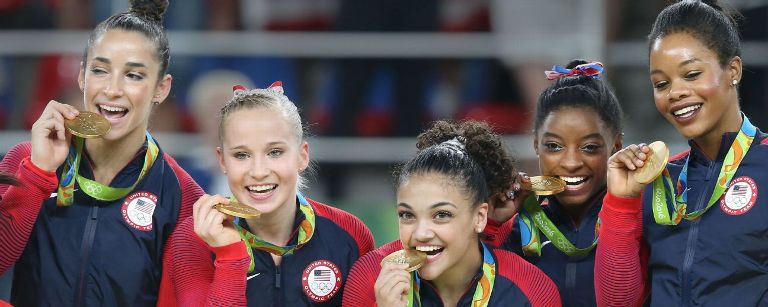
The diversity of the 2016 US women's gymnastics team

How is this for an incredible picture?


I am almost at a loss for words.  When I first saw that picture, a million questions crossed my mind.  How did we get here?  How did US gymnastics put together an elite team of gymnasts that look like a microcosm of our society?  Could we replicate this success in other contexts? If the US gymnastics team could go this far over a generation, maybe there is hope for us?

It is easy to look at this picture differently, as a critique of efforts to diversify our society.  In other words, one can look at this picture and conclude that diversity efforts are unnecessary in a world where individual merit and hard work are rewarded. Chief Justice Roberts offered a variant of this argument in his opinion in Parents Involved: "The way to stop discrimination on the basis of race is to stop discriminating on the basis of race."  And once we stop, all will be well.

I don't buy it, and I don't think the Chief Justice buys it either.  A world where merit is rewarded accordingly, and where hard work takes you where you deserve to go, is not a world I recognize. It is the great American story, to be sure, but it is not reality.  Spend one moment in a hiring committee of your choice and you will know exactly what I mean.  Merit and desert are amorphous catch phrases devoid of any useful meaning.  They are conclusions, not arguments.

Which is why the US gymnastics team blows my mind.  It is one thing to put ten runners at the starting line if we are trying to decide who is the fastest of them all (think here, incidentally, about the Iliad, and particularly Achilles' struggle with merit and desert throughout the poem, and especially during the Games).  But gymnastics, where judges stand on the sidelines and award scores to individual competitors on the basis of what they see and understand, is clearly not racing.  This is a world where conventions and traditions must be followed.  This is also a world where athletes of color have been largely absent.

And that is the point.  This team is normalizing race within a sphere where race has almost served as a barrier of entry, no different from playing quarterback or running back.  And for that, I am thankful, and hopeful.  America's darlings are White, and Black, and Latina.  And so could be anyone else, whether Asian or American Indian, Muslim or Jew.

Indeed, my mind is blown.

Indeed.

Wednesday, August 10, 2016

A word on Justice Kennedy's "surprising" turn to the left

A few weeks ago, the US Supreme Court upheld the University of Texas' affirmative action plan in Fisher v. Texas.  The big story of the case was Justice Kennedy's apparent switch on questions of race.  How in the world does a justice who refers to the use of race by the state as a "corrosive category," and who argues that “[p]referment by race, when resorted to by the State, can be the most divisive of all policies, containing within it the potential to destroy confidence in the Constitution and in the idea of equality," vote to uphold an affirmative action plan?

This was the leading narrative in the wake of Fisher.  Justice Kennedy's opinion was "stunning," "surprising," even "shocking." But that's not quite right.  

Monday, August 1, 2016

More on North Carolina NAACP v. McCrory, the North Carolina Voter ID Case

Last week, a 3-judge court of the Fourth Circuit Court of Appeals issued a unanimous opinion striking down North Carolina's voter identification laws.  Guy offered a terrific discussion of the opinion here, and I don't have much to add to his analysis.  It is dead on.  I want to focus instead on the lessons of the case about judicial behavior, race, and constitutional interpretation.

Friday, July 29, 2016

Fourth Circuit Court of Appeals Strikes Down North Carolina Voting Law

I have a few thoughts on the Fourth Circuit's decision today, which struck down NC's omnibus voting rights law.  North Carolina's law required voters to show a a photo ID when voting at the polls; it eliminated same date registration; it reduced the number of early voting days; it eliminated pre-registration, among its more notorious accomplishments. The Court concluded that the State enacted the law with a racially discriminatory intent.  After finding discriminatory intent, the Court shifted the burden to the State to show that the law would have been enacted in the absence of a racially discriminatory purpose.  The Court concluded that NC could not meet that burden and it struck down the law as unconstitutional. 

First, the most compelling part of the Fourth Circuit's opinion is its argument that the legislature requested racial data on how voters used various election procedures; after receiving the data the legislature decided which voting procedures they were going to change; the voting procedures that they changed "target[ed] African Americans with almost surgical precision." For example, the legislature requested racial data on voter ID and excluded many of the types of photo IDs used by African Americans but permitted the types of photo IDs used by whites.  The legislature requested racial data on early voting.   The data revealed that African Americans disproportionately used the first seven days of early voting.  The Court noted that "[a]fter receipt of this racial data, the General Assembly amended the bill to eliminate the first week of early voting, shortening the total early voting period from seventeen to ten days." This was also true for same-day registration and provisional voting.  For the race and law nerds, the Fourth Circuit's analysis here is similar to the Supreme Court's analysis in Gomillion v. Lightfoot: the way that the voting restrictions affected African Americans is only explainable if African Americans were being intentionally targeted.  The Fourth Circuit concluded: "In sum, relying on this racial data, the General Assembly enacted legislation restricting all--and only--practices disproportionately used by African Americans.  When juxtaposed against the unpersuasive non-racial explanations the State proffered for the specific choices  it made . . . we cannot ignore the choices the General assembly made with this data in hand."

Second, the Fourth Circuit also made clear that partisan discrimination is not a compelling defense or justification to a charge of vote denial or franchise restriction.  But as importantly, the Court made an important link between partisan discrimination and racial discrimination.  The Court said, "intentionally targeting a particular race's access to the franchise because its members vote for a particular party" is racial discrimination.  See also pages 40 and 56 where the Court is explicit that "targeting voters who, based on race, were unlikely to vote for the majority party[,] [e]ven if done for partisan ends, . . . constitute[] racial discrimination." This line of reasoning essentially eliminates the "it was not race it was party" defense.  This is very interesting and a potentially powerful development.

Third, this opinion is a repudiation of Shelby County.  The opinion is clear that just as "African American registration and turnout rates had finally reached near-parity with white registration" and that "African Americans were poised to act as a major force," the State tried to curtail the voting power of African Americans. The opinion strongly intimated that the State was able to do so only because of the Supreme Court's decision in Shelby County.  On page 32 of the opinion the Fourth Circuit take's Shelby County head-on and essentially refutes Shelby's claim that "history did not end in 1965."  From the perspective of the Fourth Circuit, NC has not stopped discriminating ("state officials continued in their efforts to restrict or dilute African American voting strength well after 1980 and up to the present day"). Moreover, they would have been more successful in their discriminatory attempts were it not for "the robust precautions of section 5 and suits by private plaintiffs under section 2 of the Voting Rights Act [which] prevented those efforts from succeeding." Shelby County removed that protection.  The Fourth Circuit restored it. 

Fourth and relatedly, the Court's analysis essentially shifts the burden on to the state to prove that it was not discriminating where there is a strong discriminatory impact.  The Court is explicit about its burden-shifting framework, but says it applies only where there is discriminatory intent.  But discriminatory intent here is basically shown with discriminatory impact. Yes, the Court uses NC's history of discrimination and some other factors to infer intent.  But the biggest factor is discriminatory impact.  If other courts follow this opinion, plaintiffs can get the burden shifted to the state where there is a strong discriminatory impact and a history of discrimination.  This process goes a long way toward restoring section 5's burden-shifting framework.

Fifth, I don't think this opinion would have been written the same way and I'm not sure if it would have come out the same way if Justice Scalia were still on the Court.  It is easily conceivable that this panel, given its makeup, might have struck down the most vulnerable provisions of the law but maybe not the whole thing.  Moreover, they would probably have done a disparate impact analysis instead of a discriminatory intent analysis.  The discriminatory intent finding allowed the Fourth Circuit to avoid sending the case (specifically the voter ID portion of the case) back down to the district court, which had upheld the law in its entirety. 

With a 4-4 split on contentious issues, Court of Appeals are functionally courts of last resort.  NC can cry as much as it wants, but its omnibus law is now dead.  It will be buried after the appeals have been exhausted.

Lastly, big win for the plaintiffs.  Total victory.